Sunday, 15 September 2013

Be Tick Aware - Part One


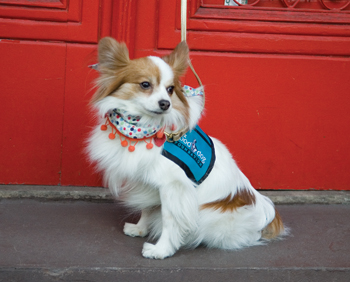
Man's best friend deserves the very best care that their owners can provide, and that includes outside the home too. This September, Frontline Spot On has launched a campaign to help keep dogs protected from ticks.

There are 20 species of these nasty little parasites found throughout the UK, which latch onto and feed off dogs, as well as cats. They can't fly or jump, instead they travel by walking on the ground or are transported by birds or animals, such as deer. When an animal or person walks by, the tick will drop or hook onto their new host with special hooks on their legs.

Most people have only seen a tick when it has ballooned on a cat or dog after feeding for a few days and full of blood. However, they are actually very small and the females are only the size of a sesame seed (about 3mm). Once a female tick has had its fill, it will swell from its original size up to 11mm - a huge difference! The males are a tiny bit smaller than the females.


Ticks can be found in woodland, moorland, heathland and grassland. As well as being found in the countryside, they are also prominent in urban parks and gardens. Some areas of the UK known to have high tick populations include: Exmoor, the New Forest, South Downs, Lake District, Yorkshire Moors, Scottish Highlands, Thetford Forest and parts of Wiltshire and Berkshire.


While ticks are present all year round, they are most likely to bite your pet from February to September. Therefore, dog owners should still remain vigilant,even when the weather gets cooler, in order to protect their pets from the dangers of this pesky parasite.

Although all breeds of dogs can attract ticks, long-haired breeds are more at risk. This is because the ticks can latch onto their long fur from the ground and crawl onto the skin to feed. They are also able to hide in their fur, making it difficult for the dog's owner to spot them. They are also mistaken for growths/warts due to the shape and size when fed.


When it comes to carrying infectious diseases, which affect both people and animals, ticks are only second to mosquitoes. To pass on disease, ticks must first feed from the infected host. After this, they will then fall to the ground and develop into the next stage of their life cycle, before finding another animal to feed off of.

One of the diseases they can carry is Lyme disease. This is an inflammatory problem caused by infection. Cases of this in dogs are difficult to diagnose, but the symptoms include loss of appetite, depression, arthritic pain and lameness. While this does generally respond well to antibiotics, if undiagnosed or untreated it can cause serious kidney damage.


  • Find out more about why celebrity Bill Oddie is fronting this campaign, the dangers ticks can have on people, why owners should be careful when travelling abroad with their pets and read why my Grandma always uses Frontline on her Lhasa Apso, Daisy in part two of my posts about the Frontline campaign. 
*Frontline Spot On are raising awareness this September to protect your dog against ticks. For more information on these parasites and how to prevent them, visit: uk.frontline.com or @BeTickAware on Twitter. 


Wednesday, 11 September 2013

9/11 - The Heroic Animals Who Helped


Today was a sad occasion because sadly it was the anniversary of the 9/11 terrorist attacks in America. Across the world people marked this sad 12 year anniversary where almost 3,000 people lost their lives with a minutes silence at 8:46 local time (12:46GMT) when the first plane hit the North Tower, when the second plane hit the South Tower and when each tower fell.

I can remember where I was quite vividly when the attacks happened. I was at home from school (I would have been 11-years-old at the time) and I was in the lounge of our house with my mum and sister. I cannot describe how I felt when I saw the Towers collapsing to the ground, but time seemed to stop. I also cannot imagine how anyone else must have felt at the time, especially those who had relatives in the building, it is simply too horrific to comprehend.

However, this post looks at another aspect about the 9/11 attacks - those animals who bravely risked their lives to help their owners, or simply people they had never met, get out of that terrible situation alive.


One such dog was Roselle. On the day of the attacks, computer sales manager Michael Hingson was at his desk on the 78th floor of the North Tower when the American Airlines Flight 11 crashed into the other side of the building, just 18 floors above. The only reason he lived to tell his story was because of his lifesaving guide dog, Roselle.

This wonderful yellow labrador calmly guided her blind owner down 1,463 steps and out of the building. Just as they got out, the South Tower collapsed. However, Roselle was not going to be taken away from her duty. She remained completely focused on the task ahead and as the debris and dust fell, she found a subway station and led them both underground to safety.


Another guide dog who helped rescue his owner that day was Salty. His owner Omar Rivera was on the 71st floor, when all of a sudden he heard a huge noise. The building shook and Salty started running back and forth along the floor. Omar was unsure what to do, but Salty came running up to him and sat next to Omar anxiously. He realised that Salty was trying to communicate with him and that he must find a way to get out.

They made their way to the stairs, which understandably was packed with a lot of very scared people. As they made their way down, it started getting very cramped and there wasn't enough room for Omar and Salty to walk side by side down the stairs. After a while, Omar decided to let Salty free. Salty continued walking down, but then decided he couldn't leave his owner and came back for Omar. Just five minutes after exiting the building, Omar heard it collapse.

"Trust is the most important thing in a relationship with a guide dog. They give everything they have for almost nothing, just for love."


Both Salty and Roselle were awarded the PDSA Dickin Medal on the 5th March, 2002. This was for "remaining loyally at the side of their blind owners, courageously leading them down more than 70 floors of the World Trade Center and to a place of safety following the terrorist attack on New York on 11 September 2001."

Ten thousand emergency workers helped to rescue people trapped in the wreckage and more than 300 of those heroes were dogs. There was a variety of breeds at Ground Zero and all were trained in a different area to help save those trapped under the rubble and debris. What makes these heroes so special is that they were the ones who went where it was impossible for the human workers to go.

After the attacks, a New York Police Department German Shepherd, called Apollo received a medal on behalf of all the search and rescue dogs at the World Trade Center. 


It didn't just end there though. After 9/11, a New York based pet therapy organisation called the Good Dog Foundation stepped in to help. Created by Rachel McPherson, it worked with the families who had lost loved ones in the devastation, those who had lost their jobs and also members of impacted communities. The ASPCA and the Red Cross also helped with the programme. 

The Foundation accompanied those who had lost loved ones to the site where the World Trade Center had once stood. The dogs were so comforting to so many families and in a way, they knew that there was no judgement. They could open up to the dogs in a way they wouldn't be able to open up to members of their family. 
These dogs deserve to be remembered just as much as their heroic handlers and other emergency workers, because they put their own lives on the line to help humans in their hour of need. 

Thursday, 22 August 2013

Sunny Days - Protecting Your Pet


It's not just us that are vulnerable to the sun's rays, our pets are too! Plenty of information is advertised about protecting ourselves when the weather warms up, but many tend to forget that our animals also need protecting too. And with the weather set to heat up this bank holiday weekend, it's worth remembering there are products available for your pets and plenty of tips to keep them cool.

Pets at Home kindly sent me some of their latest sun products for dogs to test and so before taking my friend's dog Penny out for a walk, I thought I'd give them a go!

Penny is a 7-year-old lurcher. She is a short-haired, light-coloured dog and so the sun's rays can filter through the hair to the skin. It's worthwhile remembering that dogs can burn on other parts of their body including their muzzle, ears, nose and any other pink areas that are at risk from the sun.


First were the doggy sunwipes. With a SPF of 15, all I had to do was simply run the wipe over Penny to give her instant protection. What was great about these was that they were really convenient and it didn't take two seconds to wipe Penny's ears and muzzle. There are 20 wipes in a packet, so these will last a good couple of weeks during the summer too.


Next up was the doggy sunmist. This can be used on both grown dogs and puppies and has a nice smell of vanilla coconut too. This is a fast way of applying suncream to your dog and helps you to give them complete protection. What was good about this product is that when you spray this on your pet, it's just like our suncream because you can see where it has been applied and then it disappears once it is rubbed in. I also liked that it was not too greasy and so didn't leave much residue on my hands.


Lastly, I used the doggy sun stick. Penny was very patient while I applied this, but I can understand that some dogs may not like it because when applying it to their face you have to get quite close. I used this on Penny's nose because this is an area that is always exposed to the sun when we are out walking. This is quite a handy product too, because you can easily fit it in your pocket, so when out and about the suncream can be topped up.


In warm weather our animals' body size can make them more susceptible to heat stroke, so it is hard to tell how warm your pet is because of their fur coat. Some of the signs of heat stroke include: lethargy, drooling, lack of coordination, vomiting, diarrhoea and rapid shallow breathing.

Some top tips for looking after your pet in warm weather:
  • Even if it's just for a few minutes, never leave your dog in a car alone. Although the windows may be open, temperatures can soar in minutes and can cause heatstroke. 
In June 2011, two Met police dogs were left inside a baking car for six hours. This was one of the hottest days of 2011, when temperatures outside the car reached 29 degrees (84 farenheit). Both of the dogs: Chay a bomb detection dog and Tilly a five-month-old Alsatian puppy died despite being rescued and taken to an emergency vet.
  • Ensure your pet is not kept in direct sunlight. This is especially relevant for small animals that live in outside hutches, such as rabbits and guinea-pigs and even birds kept in cages, because many simply wouldn't think that they would get hot when placed near a window.
  • During the summer months, flystrike can be rife among rabbits, especially if they are susceptible to getting dirty fur. Flies will lay eggs on the rabbit and maggots will then hatch. This is a life-threatening condition.
This happened to one of my rescue rabbits Millie. She had trouble cleaning herself and so would sometimes get dirty, even though we would clean her every day. Luckily, I caught this condition just in time, but others should be vigilant and you should check your rabbit at least twice a day. If you do find something, contact your vet immediately.
  • Ensure there is plenty of fresh water available for your pet during the day and also change this regularly to prevent it from becoming stale. 

All of the three Petkin products I tested out are available online at the Pets at Home website. At the moment, customers can also get three products for the price of two, which includes these doggy suncreams. Visit www.petsathome.com 
  • Doggy sunwipes - £2.99
  • Doggy sunmist - £5.49
  • Doggy sun stick - £4.99

Friday, 9 August 2013

The Olympics - A universal celebration


Last weekend Britain staged the Anniversary Games, just one year after we hosted, what is pretty much, the biggest sporting event in the entire world: the London 2012 Olympic and Paralympic Games.

I will talk about the Paralympic Games in a separate post, but for now I'm going to relive my experiences of the Olympic Games because I was lucky enough to attend one of the events! I managed to purchase five tickets for myself and my family to visit Greenwich Park to watch the cross-country (one of the Equestrian events).

It was so exciting to go and see so many famous horse riders all in one place and the atmosphere was electric with excitement. I even came within walking distance of one of the greatest names of all time: Mary King who has represented Great Britain at six Olympics between 1992 to 2002. Here I am just inside the venue with my dad and sisters!


There are three different challenges riders must face over a four day period within the equestrian eventing (dressage, cross-country and show jumping) and all test a different aspect of horsemanship. On the third day, riders must contend with a tough cross-country course, which is about 6km (3.7 miles) long. Equestrian is the only sport at the Olympics where men and women compete against each other.

Although this doesn't sound like much to some, during the cross-country course riders can face as many as 45 obstacles along the way and against the relentless ticking of a clock. The jumps aren't easy either, they are often pretty high and can be quite wide. As well as this, there are numerous distractions, so both horse and rider must work as one to get round the course in one piece.


The jump on the left was called the "chess table", which is a straight-forward jump, but at the maximum height and near the maximum spread it could be, it still demanded respect. The jump to the right was known as the "royal herb garden". This was the biggest and widest fence of the cross-country ends on a significant turn of the course.


The Royal Greenwich Borough jump also gave many riders plenty to think about. From the top of the initial step, it was a long way down and then the next jumps came up very quickly, leaving no room for deviation. All riders who walk the course before going round ensured they counted the number of strides between each obstacle and even tested out some of the jumps themselves!


When going around the cross-country course, the horses' legs are covered with grease to help protect them. It also helps them to slide over a fence if they get too close.


During the course, each rider is given penalty points for any time penalties and/or jumping errors and these are added to any penalties awarded during the dressage test to give a total score. The 3-day event then ends with show jumping where riders are again awarded penalty points dependent on any errors or time penalties. The top 25 riders with the least of these points then jump a final round and any points are again added on to their score to determine the individual result.

Here are some of my photo highlights:


Did you know?

  • While the jumps have become less solid over the years, before they used to be almost immobile, which did cause some riders and horses to become injured. Riders also now where a inflatable body protector, which inflates if they hit the ground. This has saved many from quite serious injury.
  • This discipline returned to the Stockholm Games in 1912, but until the 1948 Games, only people from the military could compete in the equestrian. When this ended in 1951, just one year later both civilian men and women competed. 

Monday, 22 July 2013

Animal Camouflage - Now You See Me... Now You Don't


Recently on Cage and Aviary Bird Magazine, I subbed an article from a franchise called Misadventures of a Birdkeeper. (Subbing is ensuring the article is grammatically correct, as well as making sure it is written in a clear, concise way). 

This franchise is all about contributor Bill Naylor's life working in various zoos, bird gardens and museums in the UK and overseas. In this feature he mentioned the camouflage techniques of the tawny frogmouth.


Native to Australia, they live in open forests and woodlands. They are often mistaken for owls because of their appearance and nocturnal habits, however they are more closely related to nightjars. These birds mainly eat large night-active insects and spiders and a male and female will pair for life. 

However, what makes these birds so fascinating is the way they disguise themselves! During the day the tawny frogmouth will roost in bare, sheltered trees, stumps or just on sheltered ground. At the slightest hint of a potential threat or even a disturbance, they will freeze, pack in their feathers and close their eyes to resemble slits. After this, they will look like a broken branch. Only if they are then pushed, will they reveal themselves with a frightening snapping of their yellow bills. 


This act of camouflage is the way an animal can blend in with its surroundings, and this is due either to its body's shape or the colour of its coat/skin to help it match its habitat. It's used for two reasons: to hunt or to hide from predators. 


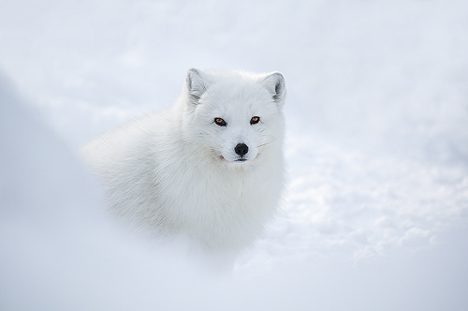
The arctic fox is a predator that needs to be able to creep up on its prey. The natural hue of its coat acts as an effective winter camouflage because they blend into the snow and ice of the arctic. When food is scarce during winter, they will follow the area's main predator - the polar bear - to eat scraps from their kills. This makes their disappearing act more vital than ever. 

When the seasons change, the fox's coat does too and so in summer it adopts a brown or grey appearance. This helps it to blend in with the rocks and plants. An extremely hardy animal, the arctic fox can survive in temperatures that get as low as -50⁰C. It has furry soles, short ears and a short muzzle, which all help in a cold climate. They live in burrows, and when faced with a blizzard, will tunnel into the snow to create shelter. 


A master of disguise that everyone has heard of is the chameleon. These colourful creatures have transparent skin and special cells that enables them to change their skin colour. It can switch from one colour to another in under 15 minutes, allowing it to escape from any predators. Interestingly, this colour change is involuntary and is caused by light, temperature and reactions such as anger or fear. This change is not related to the colour of any plant that the chameleon is on or near. 

There are about 90 species of chameleon currently known and these are native to Africa, Spain, Madagascar, India and Sri Lanka. Its feet are adapted for grasping hold of branches and other foliage, as each foot has five toes arranged in pincher-like sections of two and three. A chameleon's eyes can also rotate, both together and independently and its tongue is almost as long as its body. 


Another way some animals camouflage is by countershading. This double disguise makes it difficult for  predators or prey to see them coming. 

Sharks use countershading effectively when hunting because they has a light stomach and dark back. Therefore, when sneaking up on a shoal of fish, a shark can approach from either above or below, because its dark and light colouring breaks up its shape, making it harder to be noticed. 

There are an estimated 375 species of shark and they have been around for nearly 400 million years, making them older than dinosaurs! Sharks do not have any bones because its skeleton is made up of cartilage. This gives it more flexibility in water and helps it to stay afloat. Amazingly, sharks do not have scales and actually have teeth-like structures called denticles that cover their body to help protect it. These make the shark feel like sandpaper. 

Friday, 12 July 2013

Colchester Zoo - Happy 50th Birthday!


It's a yearly tradition that for mine and Zoe's birthday we take a trip to one of my favourite places - Colchester Zoo! This year, they were also celebrating their 50th birthday, and on Sunday June 2, I was lucky enough to be there on their official birthday.

I love visiting Colchester Zoo, mainly because all the animals are well looked after and it gives me the chance to get up close to some particularly interesting species.


One of the most fascinating animals, for me, is the Komodo dragon and it was great to see that on January 18, 2013, Colchester Zoo was lucky enough to have a new baby Komodo dragon join the adults.

The largest land lizard in the world, this huge reptile only lives on a few Indonesian islands: Komodo, Rintja, Padar and Flores. Although they can run up to speeds of 13mph, what makes this lizard so deadly is its stealth and power.

These amazing animals can spend hours waiting in one spot for that tasty meal to come along, and while it can see up to 300m away, its main primary food detector is its sense of smell. Using its long, forked tongue to sample the air like a snake, it can smell prey up to two and a half miles away if the wind is right.

That't not all. These cannabilistic dragons also produce a venom and these toxins send their prey into shock. This also prevents the wounded animal's blood from clotting and if the lizard's prey has managed to escape their jaws, this toxin will kill it within a week. Interestingly, their venom has no affect on fellow dragons.


Another great part of Colchester Zoo is that you're able to get up close to the animals. The Lost Madagascar Train takes visitors through their first lemur walkthrough enclosure, and as you can see from this photograph, I was just as interested in this ring-tailed lemur as he was in me!

In the wild, these beautiful primates are only found on the island of Madagascar, just off the coast of Africa. Unmistakable due to their long, striped, black and white tail, they use their hands and feet to move between the trees. However, they cannot grip with their tails as well as some other primates can.

They live in groups, which are known as troops, and these can include up to 30 at any one time. Both males and females live together, but unlike other animals, a dominant female presides over the troop. Sadly, the ring-tailed lemur is currently endangered because the dry forests that they love are vanishing.


Colchester Zoo is well known for its informative and entertaining talks and shows, and all are extremely popular, including the patagonian sealion show at Playa Patagonia.

Home to their five female sealions, Atlanta, Milan, Paris, Sydney and Winnipeg, unlike seals these sealions use both their fore and hind limbs on land and mainly their front flippers for swimming. Mainly feeding on fish, crustaceans and squid, they are widely distributed in the wild, but are prey for killer whales and sharks.

Sealions are also sexually dimorphic, which means that that the males and females have different physical appearances. The males are much larger, weighing between 300-350kg compared to the females who weigh 144kg.


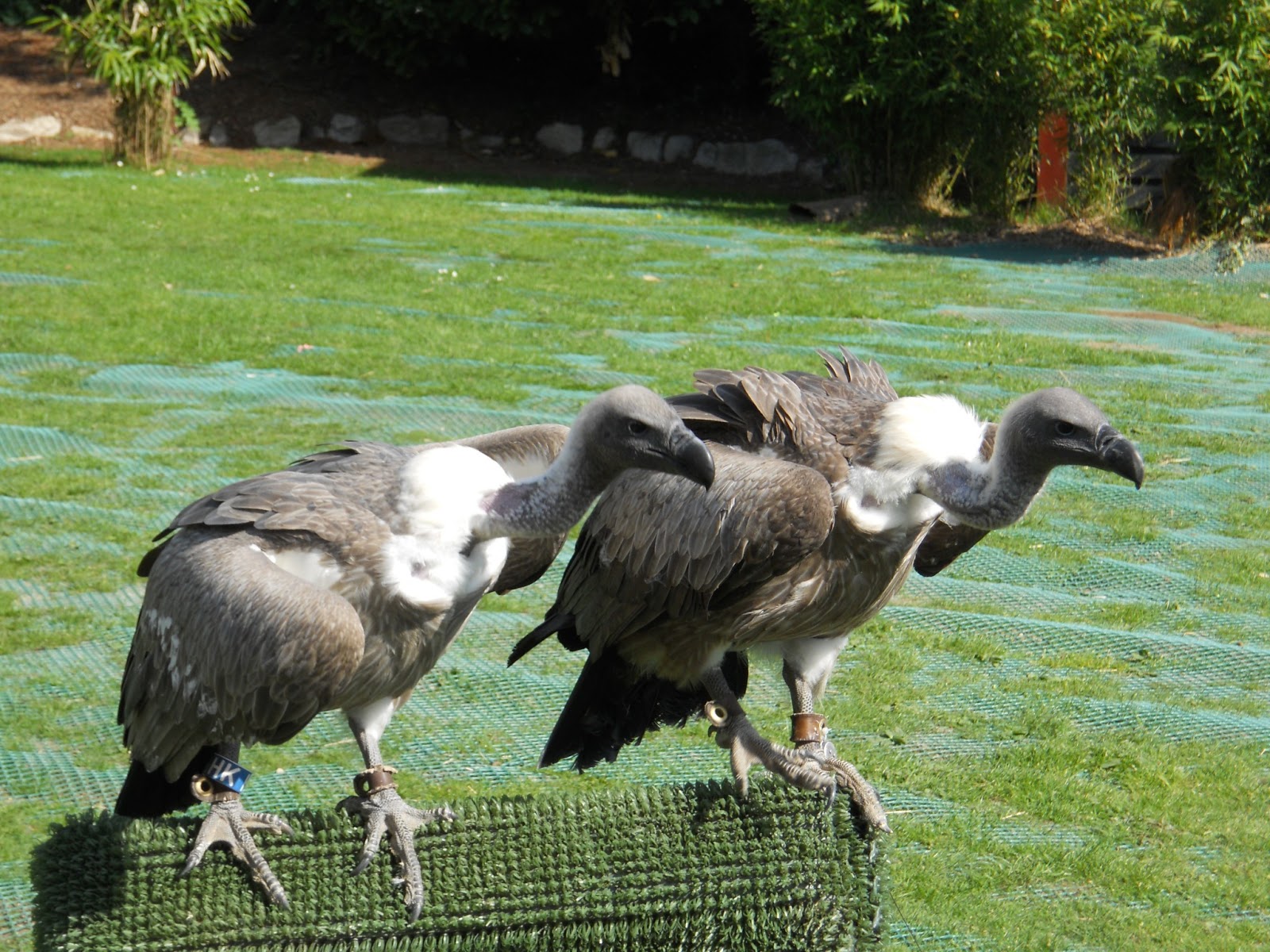
Lastly, as a new member of the Cage & Aviary Bird Magazine team, my day at the zoo was not complete until I had seen one of the various bird displays! I was lucky to view the Serengeti Skies display and come across these white-backed vultures.

This old world vulture has a wingspan of an amazing 6.4-7.4ft (that's longer than me!), which enable them to soar and circle while looking for food. Found in sub-Saharan Africa, they live in groups and have no natural predators apart from humans.

Everyone knows that vultures feed on carrion (the carcass of a dead animal) and are legendary for their ability to find this. Although, their sense of smell is poor, their eyesight enables them to spot food while in the air. They also keep an eye on each other, and if one bird swoops down, the rest eagerly follow.


With more than 260 different species and set in 60 acres, I definitely think that Colchester Zoo is well worth a visit!

Friday, 5 July 2013

The Warner Bros. Harry Potter Tour - An Array Of Animal Actors


To celebrate reaching more than 1,000 page views - thank you so much for taking the time to read my blog, it means so much to me - I thought I'd write a special post about when myself, my boyfriend Conor and my sisters Zoe and Jodie went to the Warner Bros. Sudio Tour London: The Making of Harry Potter.

Apart from seeing all the great props, costumes and sets at the tour - we even sampled a Butterbeer - what particularly interested me was the section on the animal actors that played the parts of Fang, Hedwing, Scabbers, Crookshanks and Mrs Norris.

There, at the studios in Leavesden,  the backlot was home to 250 animals of the wizarding world, which were all managed by the Animal Department. Due to the decade long production of turning the seven books into the highly successful films that they are, this gave the animal trainers the unique opportunity to watch these animals grow and learn many new tricks.


Now one of the most famous owls in the world, Hedwig was played by four different snowy owls, all of which were trained to perform certain actions. Out of all the animals that were trained, owls are the most difficult and can take up to four months to learn  tricks such as retrieve. Depending on the bird, some can even take longer than this.

Some of the animal actors were rescued and the trainers found it was easier to train youngsters, rather than older animals. Playing the part of Hedwig were Gizmo, Wton, Elmo and Sprout, with each bird undertaking a certain trick. Gizmo was trained to pick up letters and carry broomsticks in his beak, Wton was trained for action and did the flying, Elmo was trained to sit in a cage and Sprout was carried around by Daniel Radcliffe. Gizmo, Wton and Elmo were all rescue owls, while Sprout was bought from a private collector.


Nine Neapolitan Mastiffs were cast as the part of Hagrid's dog Fang - the cause of plenty of slobber while on set! Dogs enjoy the whole training process, whereas the wild animals and cats needed breaks in between shoots.

Gunner, Hugo, Luigi, Bella, Monkey Uno, Bully, Vito and Kato all played their parts as the loveable Fang. Three of these were the original Fang actors, with Hugo used in The Philosopher's Stone - The Prisoner of Azkaban, Bella when shooting in the Ford Anglia in the Chamber of Secrets because she was comfortable in cars and Vito was the 'hero' dog in the first Harry Potter and was lent to the film studio by a local family.

Rescue Gunner performed in The Order of the Phoenix, another rescue Monkey was in The Goblet of Fire - The Half-blood Prince and Luigi was in the third film. Kato and Bully were cast as back ups and were never seen on screen, while Uno was never used due to script changes.


Next are some cuddly critters who played Hermione's cat Crookshanks. Four red persians were cast as this part - Oliver, Crackerjack, Bo Bo and Prince. To make Crookshanks look unkempt, the Animal Department attached matted fur to the cats using hair clips.


A rescue cat, Oliver performed in Harry Potter and the Prisoner of Azkaban while Prince featured in the sixth film. Bo Bo was the baby of the team and was cast in the third-sixth Harry Potter films. He was trained for action scenes like chasing Ron's rat Scabbers. The last red persian Crackerjack, a very clever cat, performed in the third - eighth films and chased Scabbers around for fun.


The three cats that played Mrs Norris, Cornelius, Max and Alanis, were seen in all of the nine films. This trio of Tabby Maine Coon cats are a breed from North America. Meanwhile, more than a dozen rats played Ron's pet rat Scabbers and the Creature Shop even developed an animatronic double.

I had an amazing time at the Harry Potter Tour and it was incredible to see of the different parts of the film come to life in front of my eyes. I would definitely recommend going there as it's so much fun!