Sunday, 6 July 2014

Guide Dogs - Another Month Down For Quip


Sorry this latest post is a bit late, but Quip is just getting bigger and bigger! When I visited my uncle this month, Quip was coming up to 16 weeks old. It's amazing how different he looks in the space of a month, although he looks like he still needs to grow into his paws!


Having Quip has certainly been a learning curve for my uncle Richard. This is because although he's had plenty of dogs before (and some of them from a puppy too), Quip is not Richard's dog. He belongs to the Guide Dog Association and after caring for him and teaching him some of the basics, Quip will leave after 12-14 months for an assessment and go on to have more training in order to become a fully fledged guide dog.

Quip has to get used to having his mouth, ears and claws inspected to ensure he is in the best possible health. Richard routinely checks him every day, as well as brushing and combing him to keep Quip's coat glossy and clean. 

They have both been on the bus together and Quip has also visited the train station too. He hasn't been on a train yet, but this visit enables him to get used to the noise of the train and it doesn't seem to faze him so far. Quip is still quite excitable in the classes with other the other trainee puppies, but he's only a puppy himself so it is to be expected until he begins to calm down.

Hopefully next month, we'll get to find out how much more Quip has improved. He's such a friendly dog and as you can see, I had to get a couple of cuddles with him before we left! 


Wednesday, 21 May 2014

Guide Dogs - Quip's First Steps


Looking at this little bundle of fluff, all I can think about is how tiny he is and his beautiful big eyes. However, Quip a Golden Retriever x Labrador is no ordinary puppy. One day, he will hopefully take the big step of becoming someone's eyes. Yes, Quip is training to become a guide dog.

When my uncle, Richard, first told he was puppy walking for the Guide Dog Association, I couldn't contain my excitement. Here was my chance to document the first 14 months of training a guide dog and ultimately give both myself and others a glimpse into the life of this very special puppy.


Born on the 13th February 2014, Quip's litter can all identified because their names begin with the letter 'Q'. One of seven, he was the second puppy to be born and as Richard was told, he was the only noisy one out of the litter.

He came to live with Richard at just six weeks old in order to start his early training. Puppy walking is certainly a lot of commitment, but you can tell both Quip and Richard are really enjoying themselves and they have already become firm friends. During this time, it was also important that he did not go on grass verges or grass in parks because he had not had all of his injections. However, Richard was allowed to carry him around as much as possible so that he could experience the great outdoors.

When I visited them on May 11, Quip was about 12 weeks old and had already grown quite a lot. (What made me smile is that his legs and paws still look that bit too big for his little body and he was having lots of fun investigating me, my mum and dad. Just look at those brindle coloured paws!)


When Richard decided to become a puppy walker, he had to apply to the Guide Dog Association and they would decide if he was suitable to take on such an vital task.

Someone from the Association came to his house and went through the various aspects of puppy walking, as well as assessing the house and car. Here, they stress the fact that this puppy is not yours to keep as ultimately he/she will return to the Association to continue the next stage in their training. In Richard's case, the fact that he had owned dogs before really helped and it wasn't long before Quip came into his life.


Quip is such a clever puppy and he has already learnt such a lot considering his age. He can sit and wait, sit, lay down and Richard can tell him to wait, walk away and then call him over. To make sure he doesn't jump up at him when he is called, Richard gets Quip to come round him and then sit on his left hand side. As a rule guide dogs only work on the left and never on the right.

Once a fortnight Richard takes him to a meeting, which all the puppy walkers attend with their puppies. Here they teach the youngsters a number of different commands such as sit, come, leave and walk them on the lead. To test the puppies, hula hoops are placed on the floor and they have to walk over to see if they are relaxed. This is an important part of their training because the puppies must be correctly socialised. They must also be able to walk straight at another dog and pass them with no problems.

In addition, someone from the Association will come round Richard's house and check that Quip is the right weight, is happy and is learning everything correctly. Another important part is to say "busy" when they are going to the toilet. This is so when the the puppies are older, they will go to the toilet on command.

Richard has also taken Quip to Leigh Station so that he can experience getting into the lift and stand on the platform. He is not allowed to take Quip up to the platform when a train is going straight through the station, but Quip took all of this in his stride.


Quip and Richard's story will continue next month, but for more information about Guide Dogs, visit: www.guidedogs.org.uk

Monday, 5 May 2014

National Pet Month - The Little Hamster


They're cute, they're fluffy and and they're small. Yes, I'm talking about the shy and solitary hamster. To round off the end to National Pet Month 2014, I thought the hamster would be the ideal pet to mention.

Their name comes from the German word 'to hoard' which reflects the way that they collect food in their cheek pouches and store it, before they come back to it later on. In the wild it would be too dangerous to stop and eat in the open, which is why they wait until the safety of their home before they eat a treasured treat. What's amazing is that they can store up to half their body weight in these pouches!

There are 24 different species, but five members of this group are kept as pets. All fairly small in size, these include the Syrian, striped dwarf Russian, white dwarf Russian, Roborovski's dwarf hamster and the Chinese hamster.


My friend Gina's hamster Elwood was a Syrian hamster and was roughly two years old. Sometimes we looked after him when she went away and it was always fun to put him in his ball and let him run around the floor. He was pretty quick so we would often have to put cushions near the walls and doors to stop him running into them! 

The Syrian breed was one of the first species of hamster to become a pet and they come in a range of colours, such as black, cinnamon and white, as well as their native golden. They are 6-7 inches high and only weigh 5-7oz. This breed tends to live longer than the other types of domesticated hamster and can live for 2-5 years. 


Unlike the dwarf hamster, it is advisable to keep the Syrian breed alone. They will fight among themselves and shouldn't be kept with other hamsters past five weeks old. Dwarf hamsters can be kept in same sex pairs, but only if they are introduced when they are really young. 

It's also important to take your time and let your hamster get to know you before handling them too much. Younger hamsters will bite when startled and remember they are prey animals. They are always on the lookout for predators, such as owls, that will swoop down and grab them. Therefore, when you start to handle your hamster, always scoop them up from underneath and let them sniff your hands first. This is especially significant if you have dwarf types because they move so quickly. Cup them between your hands too and that way, they will feel more secure.


Hamsters are largely nocturnal and will snooze during the day before becoming more active at night. However, their sleeping patterns has altered due to our daily lives and artificial light, so they will wake up and then settle back down to sleep several times a day. Make sure their exercise wheel doesn't squeak or you'll be in for plenty of sleepless nights, because when they wake up they like to do some vigorous exercise. Even though they only have little legs, they can run up to five miles every night!

They also don't have very good eyesight, but what they lack in sight, they make up for with their ears and nose. Hamsters have great hearing to alert them to danger in the dark and an excellent sense of smell, which enables them to forage for plenty of food. 


As they are rodents, they have very strong front teeth that are perfect for opening nut shells and seed cases. They love to gnaw on anything hard, but make sure you keep an eye on their teeth because these teeth never stop growing. A vet can trim these down, but it means putting them under anesthetic which puts stress on their tiny hearts. Why not put a wooden chew block or provide them with plenty of seeds and nuts to trim these down instead?

Hamsters enjoy eating raw vegetables, but make sure you keep the portions small because too much will give them stomach upsets. They shouldn't be given too many treats as these contain fat and sugar. Food such as chocolate, grapes, oranges, apple seeds and rhubarb are poisonous and will make them ill.


If you're looking for a hamster because you can't commit to looking after another animal, such as a cat or a dog, why not try your local rescue centre? There are plenty of unwanted animals in the world that just want a home and all they need is a second chance.

Saturday, 3 May 2014

The Great Outdoors with Man's Best Friend


Dog owners are always told about the benefits of walking their four legged friends and from April 28 - May 5, the Forestry Commission has led a Paws Outdoors campaign with Walk Your Dog Week.

The Kennel Club says that every dog owner has a duty to to make sure that your dog gets at least one walk a day. It's also a great way for both of you to keep healthy and if you have a family it's something everyone can get involved in with minimal cost.

You don't have to be outside for hours on end and although it is not high intensity, walking is good for strengthening muscles and bones and lowering blood pressure.


For the last few years, the PDSA have launched a Pet Fit Club in an effort to help get Britain's pets fit and healthy. They found that one in three dogs and one in four cats is overweight and as well a risk of passing away sooner, our pets have a reduced quality of life. The report also discovered that pets are being fed a range of unhealthy treats by owners, including fast food, crisps, chocolate, biscuits and chips.

Their 2013 fit club winner was Ruby, a Jack Russell. A squarely-built terrier, when she started the PDSA's six month challenge she weighed 9.1kg. The normal weight of this breed ranges from 5-6kg, which made her more than 50% overweight.

Due to her sad start in life as a stray, her new owner overcompensated by feeding her too many snacks and titbits. Thankfully at the end of the challenge, Ruby had slimmed down to just over 6kg, had lost 17cm from her waist and 10cm from her chest, which all gave her a new lease of life.


I walk my friend's dog Penny every Saturday because he is unable to walk her much himself because of his ill health. He also employs a dog walker to take Penny out during the week to ensure that she gets a good amount of exercise.

It's a great excuse to get outside and out in the sunshine (sometimes), especially as my commute to work during the week is quite long. Penny is a Lurcher and while she can be laid back in the house, once outside she is very quick on her feet. She has both speed and stamina and could run for miles if asked. I don't tend to let her off her lead because she is not my dog, but sometimes my friend and I will take a trip to Belfairs Woods and let her off. It's lovely to see her have fun in the woods, especially when she legs it across the field!

Traditionally Lurchers were first-generation crosses of a sight hound with a terrier or a herding dog. but the modern day Lurcher are also bred with each other and are usually Greyhound size. Some have a rough coat, while others (like Penny) are smooth coated. They weigh 27-32kg and are 55-71cm tall. 


It's important to get the right mix of exercise dependent on the age and breed of your dog. Young puppies that have been vaccinated can be taken for a 10-15 minute walk to the park or just down the road. Then as they get older, this can be gradually built up to a longer walk. To make it more exciting, why not train them on the walk to 'sit', 'stay' and 'come' while out and about?

Make sure you don't walk them for too long, even if they are enjoying it, and avoid taking them out for long runs until their bones and joints have matured. This can take from 18 months for the larger breeds like Labradors, German Shepherds and Rottweilers to two years for giant breeds such as Great Danes. If puppies are given too much exercise too soon, this can contribute to bone and joint diseases. 


Adult dogs can have more rigorous forms of exercise, as long as they have no joint or limb problems. Walks can become longer and faster and the more agile breeds can be taken running or on endurance walks.

To make this more exciting, why not start taking agility classes or flyball training at a local club. It's a great way to socalise your dog with others and give your dog a variety of exercise. Labradors or Retrievers are good at retrieving, but are slower than the terrier and collie breeds at agility and flyball. Hound types are good running partners, while bulky dogs like mastiffs are better with slower types of exercise.


As your dog gets older, they tend to have more specific requirements when it comes to exercise. Giant breeds will slow down when they are over the age of six, while for smaller breeds this is around the 10 year marker. Their mobility levels tend to deteriorate and quite a few suffer from arthritis in the joints. In addition, other problems such as heart and breathing problems prevent them from taking too much exercise.

However, it is still important to take their exercise levels into account because older dogs have lower calorie requirements. If not monitored, this can lead to them becoming overweight and so it is worth reducing the amount of food you give them and provide them with food aimed at older dogs because these have fewer calories.


So this Bank Holiday weekend, why not aim to take your dog out on a longer or more exciting walk? The Forestry Commission has some activity sheets for everyday of the week to keep you both fit and healthy. Visit: http://www.forestry.gov.uk/pdf/Dog_activity_challenge2014.pdf/$FILE/Dog_activity_challenge2014.pdf

Monday, 28 April 2014

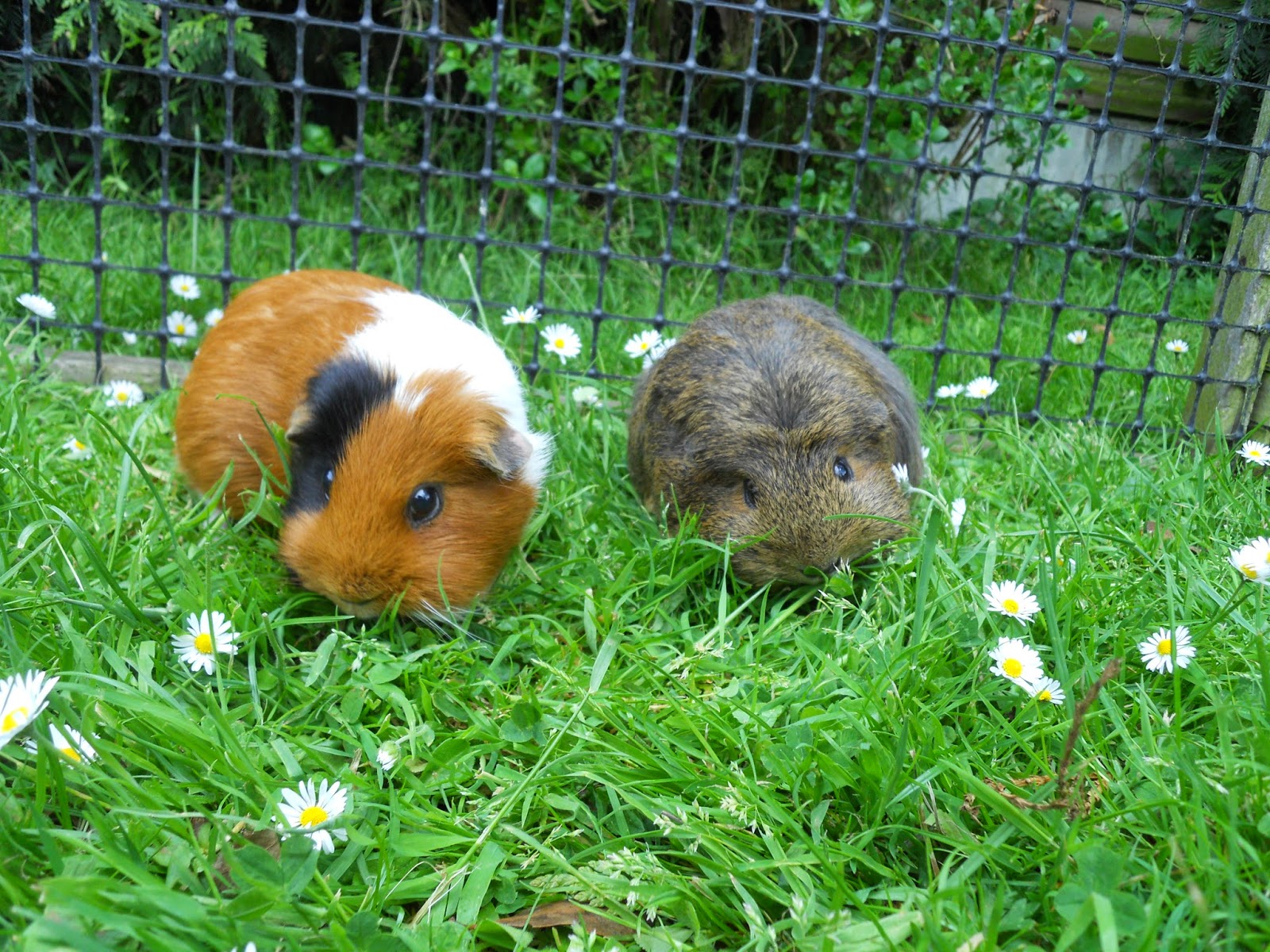
National Pet Month - The Guinea Pig


This month from April 1- May 5 is National Pet Month and all those who own a pet know that they soon become a vital part of the family. They are there at those important milestones, celebrate the successes in our lives and comfort us when we're upset. What's great about our furry/scaly friends is that they never judge and have an unconditional love for those they are close to in their lives.


First domesticated in Peru, the guinea pig has been around for thousands of years and made its way to Europe in the 1500s where they were raised as exotic pets. In fact, Queen Elizabeth I was among one of the first guinea pig owners in Europe.

There are 13 known guinea pig breeds and these include the Abyssinian, English, smooth coat, silkie and teddy. They are all similar in size, except for the Texel, and are of medium length with large round eyes and a Roman nose. Dependent on their breed, they may have a smooth coat, short hair or long hair and come in a range of colours such as chocolate, beige, silver, golden, brindle, roan, dalmatian or tortoiseshell.


Guinea pigs eat a variety of grass, fruits and vegetables in order to keep healthy, but it is important to ensure they are given extra vitamin C because their bodies cannot produce it themselves. They are one of the few mammals, other than humans, that require extra vitamin C to keep healthy. An adult needs 15-25mg each day, while pregnant females require 30mg. Guinea pigs that are ill or injured can need up to 100mg to help them get better.

Vitamin C can be provided in the form of food pellets which are available in all petshops. These pellets are much better than the normal food mixtures because your pet cannot pick and choose the parts that they like. This way all the food is the same and gives them all the nutrients they need.

Their digestive system breaks down food quickly, so they need to eat almost constantly. In addition, it is important to provide them with hay because this helps to keep their intestines healthy. It also enables them to wear their teeth down and is a good substitute for the plants and grasses that their wild cousins have access to. In addition, they enjoy vegetables including brussel sprouts, red or green peppers, parsley, dandelion and broccoli leaves.

Other foods such as avocado, chocolate, dairy products, iceberg lettuce, meat, onions, potatoes, raw beans and nuts or seeds should be avoided because they can be toxic.


As guinea pigs are prey animals, they can move quite fast. When you go to pick up your guinea pig, always support their legs and spine because they can be prone to back problems. It will also help them to feel secure and so they won't want to leap out of your arms, especially when you take them to and from their hutch!

I've been lucky to have looked after my friend's guinea pigs on a number of occasions and they're always so friendly and happy to see me. Well, especially if food is involved! They are very sociable pets and I love the way they make noises to illustrate their mood.

They are also naturally curious and so it is important to provide them with toys and spend time with them in order to keep them happy.


Fun Fact: Unlike other pets, such as hamsters, guinea pigs are diurnal which means they are awake at the same time as us and they sleep when we sleep. Although, they certainly like to take a nap or two during the day, too!

Sunday, 6 April 2014

How Much Does Your Pet Mean To You?


We all love our pets, whether they are tiny, huge, scaly, feathered or furry, and it's our duty to provide them with the best care we can to keep them happy and healthy. However, it's not all one way and it has actually been proven that most pet owners are happier in their own lives because they share it with a pet.

To celebrate the second year of the National Office of Animal Health's (NOAH) 'I Heart My Pet' campaign, researchers conducted a study of more than 2,000 pet owners to see just how our animals affect us in our day-to-day lives. They found that approximately 90 per cent of those interviewed claim to be happier as a result of having a pet and 48 per cent of people believed that spending time with their pets reduced their stress levels.


I've had rabbits since I was eight years (I'm nearly 24 now!) and I have to say that they have certainly enriched my life. I got my rabbit Simba just over two years ago and he's such a character. I've bought him in overnight every day since the winter because of the horrible weather we've had and there's nothing better than going into the kitchen to have my breakfast and seeing him waiting for me to open his hutch door. Even though he can't talk back, those morning chats while we're eating breakfast (me with my shreddies and him with a leaf of cabbage) help get the day off to a great start.


NOAH also found that more than one in five people surveyed said they are at their happiest when they spend time with their pet. My grandad passed away a few years ago and my nan would have been very lonely on her own. Her lhasa apso Daisy helps to distract her and keep her busy. She's a bundle of fluff and when we go and visit, she always carries my bag inside!

I can say the same about one of my friends who is elderly. He lost his wife a couple of years ago and he has a pet lurcher called Penny. I believe that having Penny during this difficult time has helped to keep him going.


It was enchanting to read that some of the findings of this survey paints a picture of a nation of Doctor Dolittles. This is because they found that almost two thirds of owners believe they can understand the noises their pet makes and 49 per cent say they are able to read their pet's facial expressions. In addition, 48 per cent think they know when their pet is happy or sad.

I love this idea and think all pet owners roughly know how their pet is feeling at a certain time. Sometimes, when I'm grooming Simba's mane (he's a lionhead) he puts on a long-suffering face as if to say 'Go on then, if you have to.' When I've taken Penny out for a walk, she'll bark at my friend and he knows whether she wants to go out into the garden or if she wants some food.

I think when we spend so much time with our pets, we do develop a kind of a relationship with them. It works the other way, too. If I'm sad, Simba will come up and just lay next to me, just to let me know that he's there and he'll let me stroke him for as long as I need to.


The final results of the survey discovered that 12 per cent believe their pet is the most important person in their lives and and one in 10 women would turn to their pet before a partner with a problem.

This shows just how much we value our pets and reinforces that they are full-fledged members of the family. I think they are just as important as any other member, more so because they depend on us to look after them and take them to the vet when they are ill. Last year, Simba broke his leg and me and my family spent £500 so that the vet could help make him better. While this is a lot of money, I believe he was worth it because as an pet owner I have a duty to look after him.


The National Office of Animal Health (NOAH) has a new website (www.pethealthinfo.org.uk), which offers expert healthcare advice for pet owners, as well as activities to help keep pets happy and healthy all year round. Follow the campaign @Iheartmypetuk on Twitter or find IHeartMyPetUK on Facebook.

Saturday, 8 March 2014

Pets - Keep Calm and Stress Free


At the end of last year (I can't believe we're already in March), I wrote a post about trying to keep your pets calm and relaxed throughout November and the New Year. As we all know, this is the season for fireworks and the bangs and flashing lights can often leave your pet feeling stressed and frightened.

Two people I know have dogs that really suffer when fireworks are let off and nothing seems to help keep them calm. Last November I was sent some Pet Remedy products, which are designed to tackle stress and I thought I would see if this could help. I gave my horse riding instructor Teresa two Pet Remedy plug in diffusers and my sister's work colleague Debbie a diffuser and a mini spray.


Teresa's 13-year-old creme coloured labrador Oscar reacts badly to fireworks. When they go off, he shakes uncontrollably, his breathing becomes rapid which makes him sweat and, in addition, a muscle spasm occurs in his hindquarters which causes paralysis. One time, he resorted to eating through a door frame.

Before the diffusers Teresa would try to hug him and keep him close when the fireworks were let off, but he would just shake even more. She tried some pills from the vet, but there was no change. She also purchased a 'thunder coat' for him, which is worn like a normal dog coat, and although these helped a bit, there was only a minute difference. Teresa also tried another diffuser, igloos for him to hide in and put the TV on loudly, but none of these helped. He would also not eat for the whole firework period, which amounted to a whole month.

When Teresa used the diffuser, and sprayed the 'thunder coat' with this solution, she noticed an immediate effect. Although, Oscar still shook, it was not enough to cause paralysis in his hindquarter and he thankfully kept eating throughout this period.


Debbie, my sister's work colleague, owns a male labradoodle called Harvey. In November last year, he was just under six years old.

Harvey's normal reaction to fireworks is complete panic. This would result in pacing, panting, scratching and digging, as well as slight aggression. He then developed a general noise phobia and became nervous around all loud noises.

During the firework period Debbie and her family would talk to Harvey calmly, try to distract him with loud music and play with interactive toys. She also tried Harvey in a 'thunder coat', built him a safe den and tried a range of medication such as diazepam, calmeze and zylkene.

The Pet Remedy was used in addition to Xanax tablets as prescribed by a vet. Harvey seemed a lot calmer when the diffuser was used and Debbie was able to give half the maximum does of Xanax for Harvey's weight. It lasted for more than three weeks and Debbie now uses the diffuser when she leaves Harvey home alone.


Teresa also has another dog called Archie, who is a 13-year-old fox red labrador. When fireworks go off he paces and hides, hence why Oscar chewed through a door frame to get to his brother. Although he still eats, he will only have a limited amount and is usually affected by his stressed out brother. 

As like Oscar, Teresa tried to hug Archie to keep him calm, but it made him worse. Medication from the vet, a 'thunder coat' and different diffuser had no effect on him. He did not appreciate the igloos Teresa bought for him to hide in and the TV on loud and the lights out did not make any difference either.

Both the Pet Remedy diffuser and the 'thunder coat' sprayed with this solution helped Archie. It was particularly evident to see when Oscar was also relaxed. Nothing else works on Teresa's dogs to keep them calm and she will continue to use this in the future. 


Pet Remedy is a natural way of tackling stress and anxiety and helps to keep your pet calm without the need for sedation. It can be given to a range of different animals, including dogs, cats, rodents, horses and birds. 

This solution uses a blend of natural oils to calm the nerves when they are overstimulated in times of stress. It is available as a plug in diffuser and calming spray. For more information, visit: www.petremedy.co.uk www.facebook.com/petremedy or call 01803 612 772.